


 Back
Back
 Free Delivery With Orders Over €60
 Dispatching From County Louth to NI and ROI
 August Gardening Jobs
Gardening Jobs for March
Posted by Tom Steel on 27th Feb 2026
March is the month the garden really starts to get going. With lighter days and better soil conditions, shoots are pushing up and buds are starting to swell.
Now’s the time to get stuck into pruning, planting, and sowing so your garden is ready to burst into life over the months ahead. In this blog, we’ve gathered all the key jobs for the month, from tidying and dividing perennials to sowing hardy vegetables and giving wildlife a helping hand.
Prepare Structural Plants
Refresh Roses before new growth emerges
Pruning Roses now helps shape plants and channel energy into vigorous new shoots. Focus on removing dead, weak or crossing stems, and secure climbers to supports before the season really gets moving.
Tip: Always prune back to an outward-facing bud - this creates an open habit and reduces disease risk.
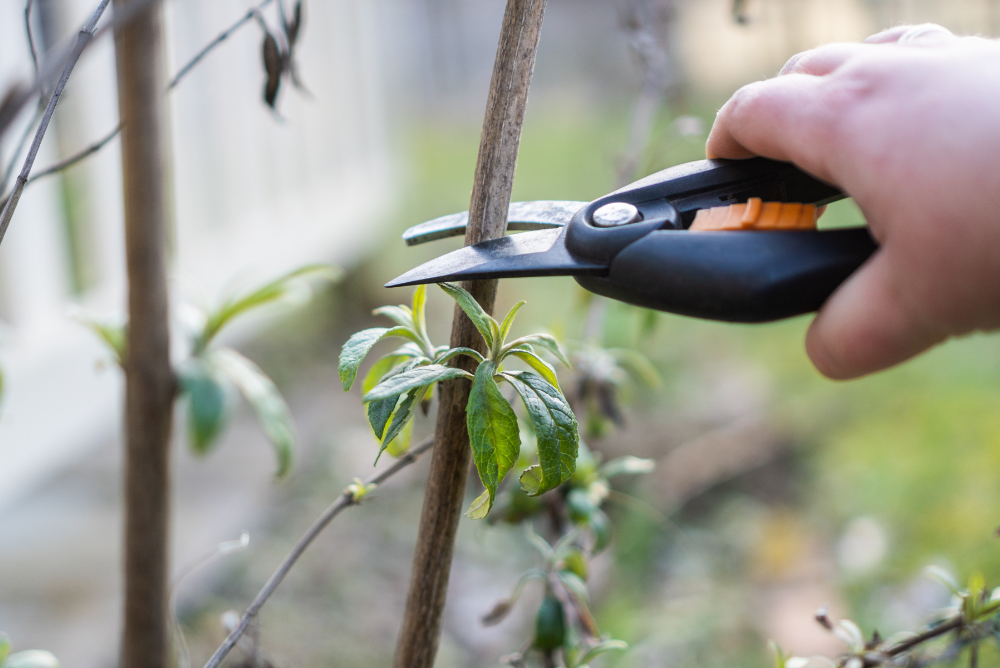
Give Buddlejas a hard prune for summer drama
Buddleja blooms on new wood, so an early hard cut stimulates strong shoots and abundant summer flowers. Trim back to a sturdy framework, and don’t hesitate to reduce stems to roughly 30-60 cm if they’ve become leggy through winter.
Tip: Cutting back weak growth improves airflow and strengthens plants against winds.
Clear, Divide and Encourage New Shoots

Clean up herbaceous perennials & grasses
If you left plants standing over winter for structure or wildlife, now’s the time to clear them. Removing old stems frees space for fresh shoots and tidies beds ahead of rapid growth.
Tip: Look carefully at the base before cutting - new shoots are often already emerging.
Split congested clumps to boost vigour
As soil warms, perennials like Astrantia, Geraniums and Heleniums can be lifted and divided. This improves airflow, boosts flowering and gives you extra plants to fill gaps.
Tip: Work on a dry day when soil is easier to handle, and water well after replanting.
Sowing and Planting for Early Harvests
Sow hardy veg outdoors
March heralds ideal conditions for sowing broad beans, peas, carrots, parsnips, spinach and hardy salad leaves straight into the ground. These crops handle cool soil and reward patience.
Tip: Warm soil ahead by covering beds with fleece or cloches a week before sowing - this can significantly lift germination odds.
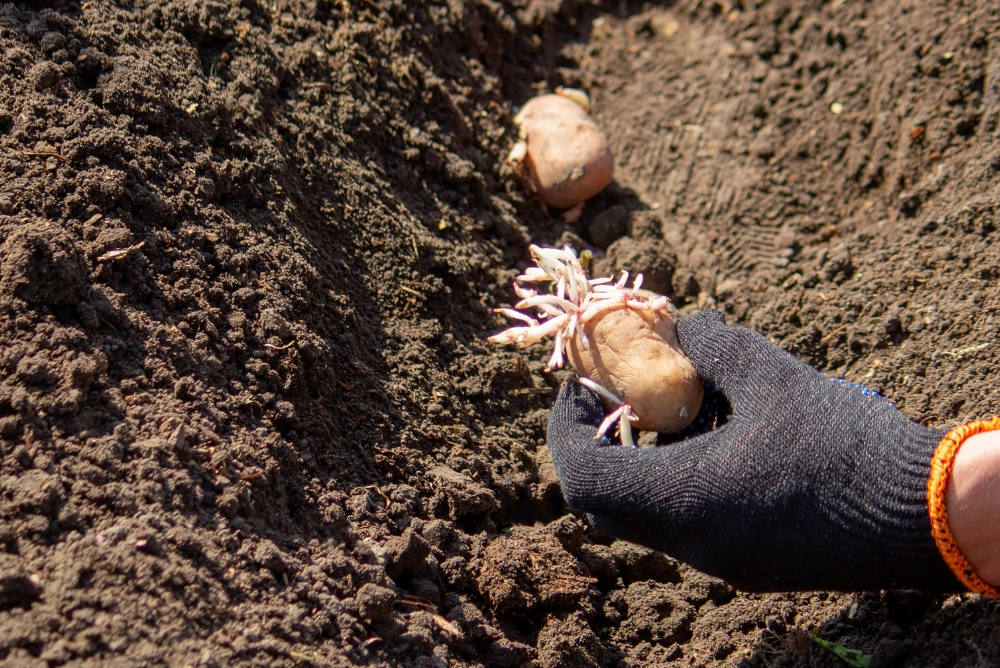
Plant onion sets, shallots and early potatoes
Cool, workable soil makes March perfect for establishing the backbone of your kitchen garden. Keep spacing even and work soil lightly to preserve structure.
Tip: Hill potatoes as shoots grow - this shields them from late chills and supports a bigger crop.
Introduce summer-flowering bulbs
With soil warming, bulbs like Lilies and Gladioli can go in now to form strong roots before summer. Focus on well-drained beds or add grit in heavier soils to prevent rot.
Tip: Plant to the correct depth and mulch lightly to conserve moisture without suffocating roots.
Early Tender Starts Under Cover
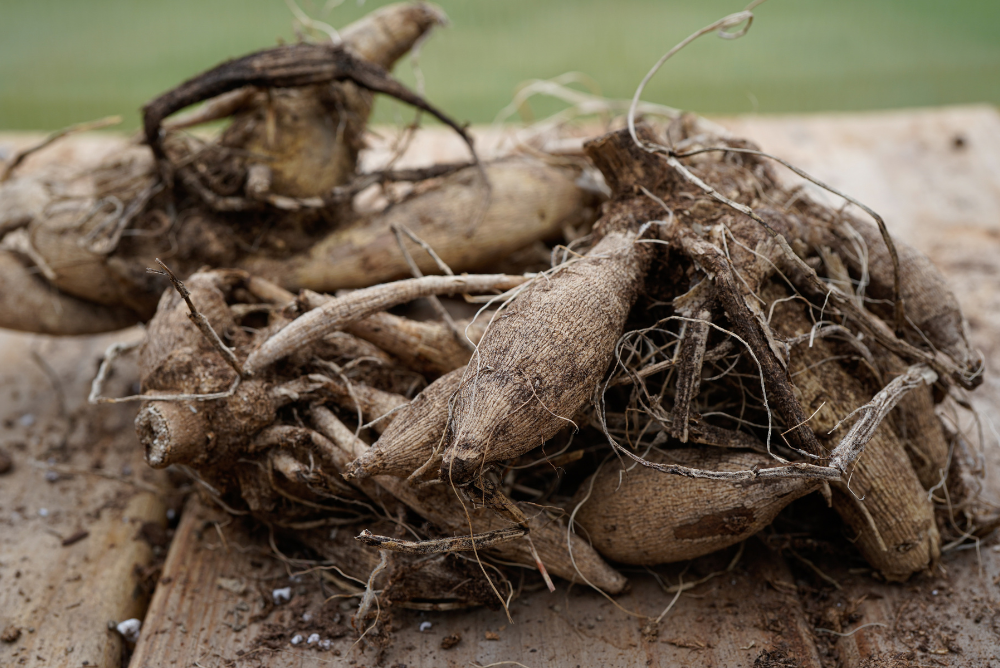
Begin Dahlia tubers indoors
Tender Dahlias benefit from an early start in a frost-free space. Place tubers in peat-free compost and keep in bright conditions until shoots reach around 5 cm.
Tip: Pinching out the growing tip at this stage encourages bushier growth with more blooms later.
Prepare for soft fruit
Dormant currants, gooseberries, raspberries and cold-stored strawberry runners can be planted now. Early establishment results in better cropping.
Tip: After planting, apply a mulch of compost around the base to conserve moisture and suppress weeds.
Maintenance That Makes a Difference
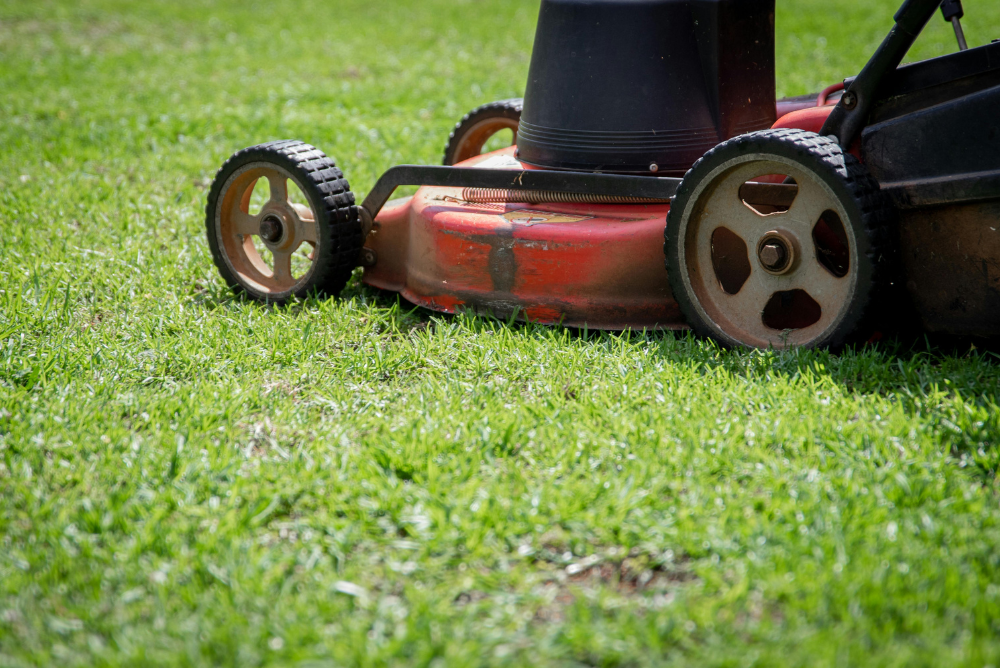
Lift the first lawn mow of the year
Grass begins to grow again on dry spells. A light mow removes winter debris and encourages thicker turf.
Tip: Keep the blade higher than midsummer cuts - remove no more than one-third of height to avoid stress.
Stay ahead of weeds
Weeds hit growth quickly in March. Hoe early and often, clearing seedlings before they compete with desired plants.
Tip: Hoe in sunshine so weed cuttings shrivel on the soil surface and don’t re-root.
Refresh containers and pots
Winter rain compresses compost and leaches nutrients. Top-dress with fresh compost to improve structure and give plants a gentle nutrient lift.
Tip: Loosen the surface before topping up so roots can access oxygen and moisture more easily.
Support Wildlife and Water Features
Encourage early pollinators
Dandelions and other early blooms are vital nectar sources for emerging bees and beneficial insects. Leaving a small patch of lawn or border unmown or uncultivated gives them crucial early season forage.
Tip: Group pollinator-friendly plants together - this offers a stronger food source than scattered flowers.
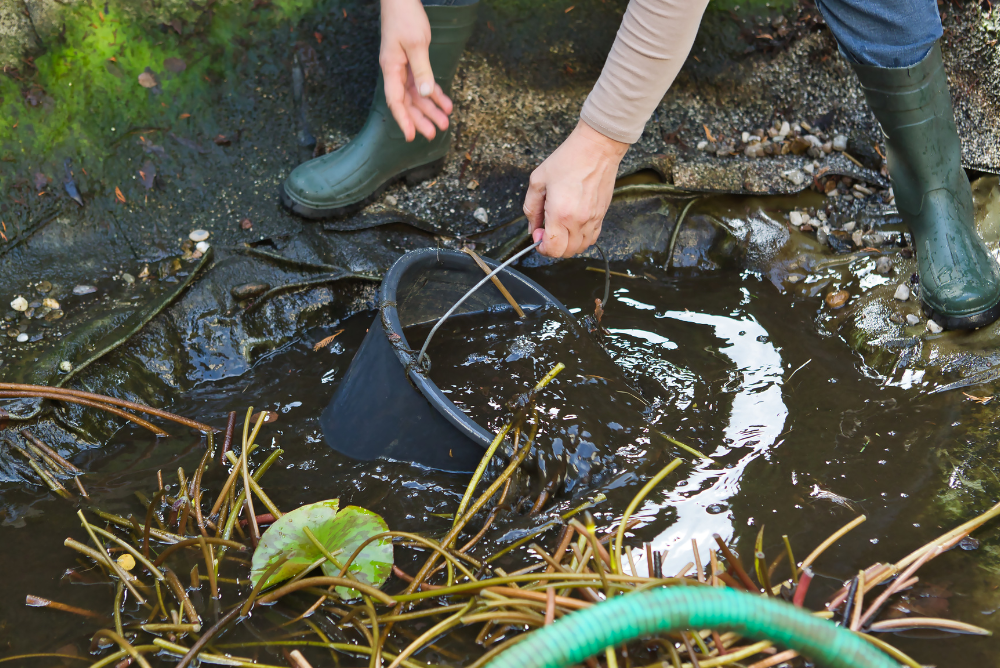
Bring ponds back to life
As water temperatures rise, pond ecosystems re-activate. Restart pumps, remove debris and begin light feeding for fish.
Tip: Net debris gently rather than draining the pond - this helps preserve helpful microflora and reduces disruption.
New In
Vaccinium ‘Pink Lemonade’
Supplied as 9cm Pot Grown Plants
Packs of 1 & 3
Shop now
Lilium ‘Forever Susan’
Supplied as 16-18ccm Bulbs
Packs of 3 & 6
Shop now
Rose Joie de Vivre
Supplied as Two-year old rose bushes
Packs of 1 & 2
Shop now
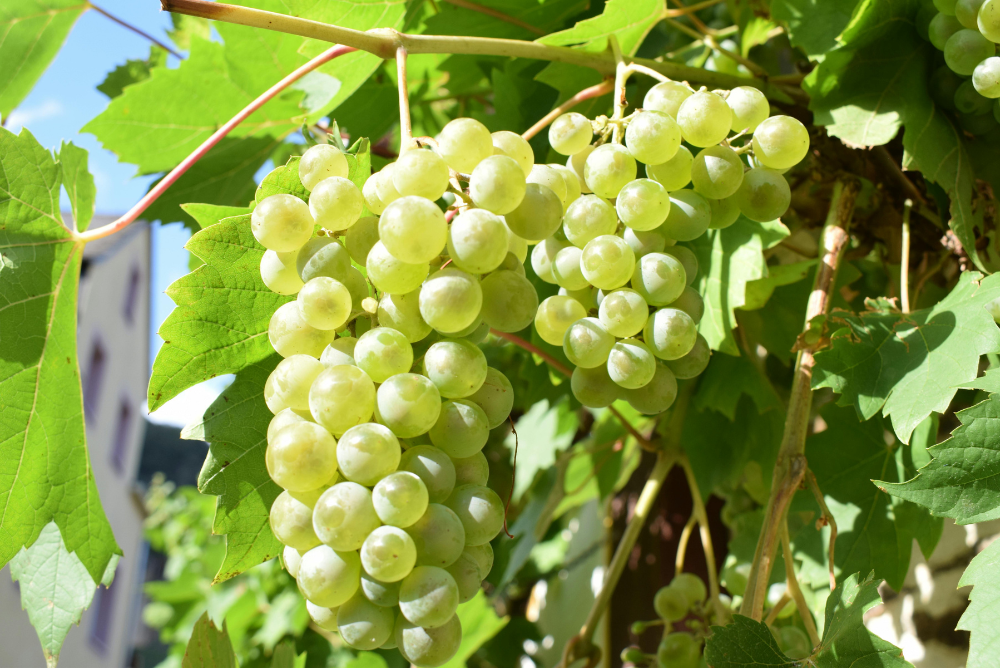
Vitis ‘Himrod’
Supplied as 9cm Pot Grown Plants
Packs of 1 & 2
Shop now
More monthly jobs
Gardening Jobs for January | Gardening Jobs for February | View All Gardening Jobs